
Franklin Sports Kids Football Target Toss Game Review
Inflatable Football Throwing Target with Mini Footballs for Accuracy Training
Analysis
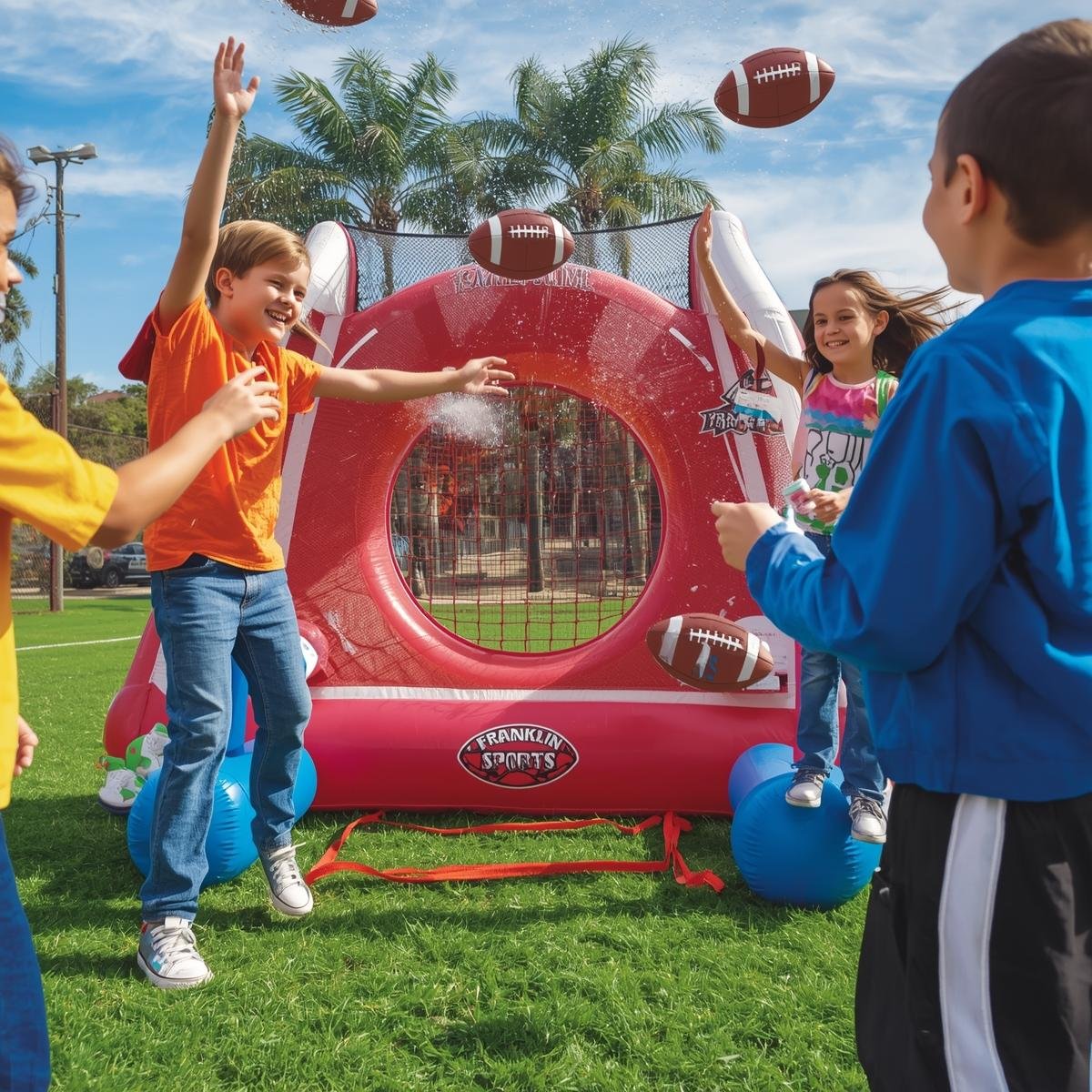
The Franklin Sports Kids Football Target Toss Game represents an engaging outdoor activity toy designed for children ages 6-12, featuring an inflatable target stand with scoring zones and included soft mini footballs for throwing practice[web:990][web:992]. The set typically includes one inflatable target measuring approximately 36-40 inches tall when fully inflated, plus 2-4 soft foam mini footballs depending on package variation[web:990]. This configuration transforms basic throwing practice into competitive scoring game that develops hand-eye coordination, throwing accuracy, and athletic fundamentals while providing entertaining outdoor activity that encourages physical play away from screens[web:990]. The $20-35 pricing positions it as affordable backyard entertainment option for families seeking active play equipment that promotes skill development alongside fun.
Construction utilizes durable vinyl material for the inflatable target featuring multiple colored scoring zones arranged vertically with point values typically ranging from 10 to 50 points based on difficulty[web:990][web:992]. The target design incorporates large cutout holes or targets at various heights requiring different throwing arcs and accuracy levels, enabling progressive skill challenge as children improve their throwing technique[web:990]. The base section features built-in water or sand compartment designed to provide stability preventing the lightweight inflatable from tipping over when hit by thrown footballs or exposed to light winds during outdoor use. However, the stability remains weather-dependent—moderate winds exceeding 10-15 mph can still topple insufficiently weighted targets despite filled base compartments.
The included mini footballs measure approximately 7-8 inches in length, constructed from soft foam rubber designed for safe throwing practice without injury concerns when footballs contact children, windows, or outdoor furniture[web:990]. The foam construction provides sufficient weight and density to fly reasonably straight when thrown with proper spiral technique, though the lightweight nature makes them highly susceptible to wind deflection compared to regulation footballs. The soft material compresses on impact rather than bouncing off surfaces violently, reducing retrieval chase distances while maintaining safe play characteristics even during enthusiastic throwing by energetic children. However, the foam durability proves limited—repeated impacts and outdoor exposure cause gradual compression and surface tearing after 2-3 months of regular use necessitating eventual replacement.
Setup requirements remain minimal with straightforward inflation via standard air pump—manual or electric pumps work equally well, with full inflation typically requiring 3-5 minutes of pumping effort depending on pump type[web:990]. The inflation valve features standard design compatible with beach ball and pool toy pumps most families already own, eliminating need for specialized equipment purchases. After inflation, the base compartment requires filling with water via garden hose or buckets, or sand if longer-term setup without drainage concerns is desired. Water filling proves faster and enables easier portability through draining for storage, while sand provides superior stability but creates permanent weight making the target difficult to relocate once positioned.
Portability features when deflated enable compact storage consuming minimal garage or shed space during off-season months or between play sessions[web:990]. The vinyl material folds into approximately 12x12x3 inch bundle when fully deflated and folded, fitting easily into storage bins or hanging on wall hooks. However, the deflation and reinflation cycle proves time-consuming enough that most families leave the target inflated throughout active play seasons, requiring dedicated yard space for semi-permanent positioning. The bright multi-color design with team branding variations (typically featuring popular NFL or college team logos depending on version purchased) provides visual appeal attracting children’s interest while aiding visibility during outdoor play[web:990].
Assessment
Throwing accuracy development proves genuine through the progressive difficulty of scoring zones at different heights and distances[web:990][web:992]. Children naturally gravitate toward attempting higher-point targets positioned in smaller openings or at greater heights, encouraging skill progression as success with easier targets builds confidence for attempting more challenging throws. The immediate scoring feedback creates satisfying gamification that maintains engagement across multiple play sessions—children repeatedly return to beat previous high scores or compete against siblings and friends. However, the scoring zones lack electronic tracking requiring manual scorekeeping, which younger children may struggle to maintain accurately during fast-paced competitive play.
Stability performance varies significantly based on base filling thoroughness and wind conditions. When properly filled with water to maximum capacity, the target withstands direct football hits from 10-15 feet distances without tipping, maintaining upright position throughout typical play sessions. However, inadequate filling or windy conditions expose the fundamental limitation of lightweight inflatable design—the target tips over repeatedly frustrating children and interrupting play flow. Sand filling provides notably superior stability compared to water, withstanding stronger hits and windier conditions, though it creates semi-permanent installation that families may regret when desiring yard reconfiguration. The vinyl material itself withstands impacts well without puncturing from standard foam football throws, though sharp objects and rough surfaces pose puncture risks requiring careful placement away from thorns, gravel, or sharp fence edges.
The mini foam footballs deliver adequate throwing performance for skill development though with notable limitations. Children ages 6-10 can grip the 7-8 inch length comfortably enabling proper finger placement for spiral attempts, and successful spirals do occur when technique is correct. However, the lightweight foam construction means even properly-thrown spirals wobble and drift compared to leather footballs, creating somewhat unrealistic flight characteristics that don’t fully translate to regulation ball performance. Wind sensitivity proves particularly problematic—even light 5-10 mph breezes cause noticeable trajectory changes requiring children to adjust aim significantly, which can frustrate younger players expecting balls to travel where aimed. The soft foam eliminates injury concerns but also reduces throwing satisfaction compared to the solid “thunk” sound and firm grip of traditional footballs.
Durability testing through typical children’s play reveals the vinyl target withstanding regular use reasonably well across single summer seasons[web:990]. The seams remain intact through hundreds of inflations and hits, and the material resists punctures from grass, dirt, and foam football impacts. However, prolonged sun exposure causes gradual vinyl degradation visible as fading colors and slightly brittle texture after 3-4 months of outdoor positioning in direct sunlight—storing the target in shade between play sessions extends lifespan considerably. The foam footballs represent the primary durability weakness—the foam compresses permanently after 50-100 throws causing wobblier flight, and surface tears develop from repeated concrete impacts or being stepped on accidentally. Replacement foam footballs are available but finding exact size matches proves challenging, often requiring generic foam ball purchases that may not perfectly fit the target hole sizing.
The entertainment value proves highest for children ages 6-9 who find the scoring challenge engaging and skill-appropriate[web:990]. Younger children under 6 often struggle with the throwing distance and accuracy requirements becoming frustrated, while older children beyond age 10 frequently outgrow the challenge level finding the targets too easy and the foam footballs too unrealistic. The sweet spot of 2-3 years age appropriateness represents shorter engagement window compared to more universally-aged outdoor toys like trampolines or swing sets, suggesting this toy functions better as supplementary backyard entertainment rather than primary activity investment.
Pros and Cons
Advantages
- Develops throwing accuracy and hand-eye coordination through progressive difficulty
- Multiple scoring zones create competitive gameplay maintaining engagement
- Soft foam footballs safe for children, windows, and outdoor furniture
- Affordable $20-35 pricing for complete throwing practice set
- Deflates for compact storage consuming minimal space
- Easy setup requiring only standard air pump and water/sand
- Encourages active outdoor play away from screens
- Suitable for both solo practice and multiplayer competition
- Bright colors and team branding provide visual appeal
- Compatible with standard air pumps most families own
Disadvantages
- Lightweight design tips over in moderate winds despite base weighting
- Foam footballs highly susceptible to wind deflection affecting accuracy
- Limited age appropriateness window primarily ages 6-9
- Vinyl degrades from prolonged sun exposure requiring shade storage
- Foam footballs compress and tear after 2-3 months requiring replacement
- Setup and inflation time-consuming discouraging frequent use
- Requires dedicated yard space for semi-permanent positioning
- Manual scorekeeping needed as no electronic tracking included
- Sand filling creates difficult-to-move permanent installation
- Replacement foam footballs difficult to source in exact sizes
Experience
Throughout one summer season of regular weekend use with children ages 7-9, the Franklin Sports target game consistently provides 30-60 minutes of engaging outdoor entertainment per session before interest wanes[web:990]. Initial setup proves straightforward though time-consuming—15 minutes for inflation and base filling represents acceptable one-time investment for families planning extended seasonal use. However, families attempting frequent setup and teardown quickly abandon the routine due to time requirements, instead leaving the target inflated throughout active months. The scoring competition between siblings generates genuine excitement with children tracking personal bests and challenging each other to score contests, though parental scorekeeping supervision proves necessary for fair play with younger children who sometimes adjust scores favorably.
The throwing accuracy improvement proves measurable over weeks of practice. Initially, children ages 7-8 struggle consistently hitting even the largest bottom scoring zones from 10 feet distance. After 4-5 weekend sessions totaling 8-10 hours of throwing practice, success rates noticeably improve with children achieving 50-70% accuracy on lower targets and occasional success on higher-point targets. This visible skill progression maintains motivation as children perceive their improving abilities, creating virtuous cycle of practice leading to improvement leading to more enthusiastic practice. However, the foam football limitations become increasingly apparent as children’s skills advance—successful throws that would hit regulation footballs miss due to wind drift or wobble from the lightweight foam construction, creating frustration as physical technique improves but results don’t match expectations.
The stability challenges prove the primary source of frustration throughout the season. Despite filling the base completely with water, the target tips over 2-3 times per 30-minute play session when hit squarely by well-thrown footballs or when light winds push against the large vinyl surface area. Each tipping requires adult intervention to reposition and refill if water spillage occurs, interrupting play flow and reducing children’s engagement. Families who switch to sand filling report dramatically improved stability with tipping occurring only during strong wind gusts or extremely hard hits, though they express regret about the resulting immobility preventing yard repositioning when needed for mowing or entertaining.
The vinyl durability holds up adequately through single season use though with visible deterioration. After three months of outdoor positioning in direct sunlight 4-5 days weekly, the once-vibrant team colors fade noticeably to washed-out pastels, and the vinyl develops slightly brittle texture indicating material breakdown. No punctures occur during this timeframe from normal play, though families report close calls when target tips over onto rocks or sharp sticks requiring careful placement on clean grass areas. The foam footballs tell a different durability story—by season end, all included footballs show visible compression and surface tears with one ball completely unusable due to split seams. Generic replacement foam balls purchased online fit approximately but create different flight characteristics requiring children to readjust aim calibration.
The overall entertainment value justifies the modest $20-35 investment for families with children in the 6-9 age sweet spot seeking supplementary outdoor activities[web:990]. The throwing practice provides legitimate skill development benefits while the competitive scoring elements maintain engagement beyond simple catch practice. However, the limited age appropriateness window means the toy delivers 2-3 years of use at most before children outgrow the challenge level or lose interest, representing shorter lifespan compared to more universally-aged outdoor equipment investments.
Comparison
Franklin Target Toss vs SKLZ Football Trainer: The SKLZ offers superior stability through heavy-duty stand design and includes higher-quality footballs, but costs $60-80—double the Franklin price. The SKLZ suits serious skill development for children 8+ focusing on sports training, while the Franklin provides better value for younger children 6-9 seeking entertainment alongside casual skill development. Choose SKLZ for dedicated football training or Franklin for affordable backyard fun.
Franklin Target Toss vs Simple Backyard Catch: Traditional catch between parent and child costs nothing and develops throwing skills effectively, but lacks the competitive scoring gamification and solo practice capability the target provides. The Franklin target enables independent practice when throwing partners aren’t available and creates measurable skill progression through scoring. Choose free catch for maximum cost savings and bonding time, or the target for independent play and competitive elements.
Franklin Target Toss vs Cornhole Board Set: Cornhole offers longer age appropriateness (ages 4-adult), better durability from solid wood construction, and lower skill floor enabling family-wide participation at $60-100 pricing. However, it doesn’t specifically develop football throwing skills. Choose cornhole for universal family game lasting years, or Franklin target for football-specific skill development with shorter lifespan.
Franklin Target Toss vs Basketball Hoop: Adjustable basketball hoops priced $100-300 provide longer age appropriateness (ages 4-18+), superior durability, and more universal sports interest. However, they require significant installation effort and permanent placement. Choose basketball hoop for primary backyard sports investment, or Franklin target for supplementary affordable football activity requiring minimal commitment.
Conclusion
The Franklin Sports Kids Football Target Toss Game succeeds as affordable supplementary outdoor activity toy for children ages 6-9 that combines throwing skill development with competitive scoring entertainment[web:990][web:992]. The progressive difficulty of multiple scoring zones creates engaging gameplay that maintains interest across multiple sessions while providing measurable skill improvement feedback. The soft foam footballs ensure safe play without injury concerns, and the inflatable design enables compact storage between seasons. For families seeking budget-friendly outdoor entertainment that encourages active play and develops athletic fundamentals, the Franklin target delivers solid value at $20-35 pricing despite limitations.
The target excels for its intended purpose: providing backyard throwing practice that’s more engaging than simple catch through gamification elements. Children in the 6-9 age range find the challenge appropriately difficult maintaining motivation, while the scoring competition works well for sibling rivalry or friendly contests. The setup simplicity and compact storage suit families desiring seasonal toys that don’t require permanent yard commitments like swing sets or trampolines. For parents seeking affordable ways to encourage outdoor screen-free play while developing coordination skills, this represents worthwhile investment for appropriate-aged children.
However, prospective buyers must acknowledge inherent limitations including stability challenges in windy conditions, foam football durability issues requiring eventual replacement, limited 2-3 year age appropriateness window, and vinyl degradation from sun exposure. Families in particularly windy regions may find the constant tipping frustrating enough to abandon use, while those seeking long-term backyard equipment investments should consider more durable permanent alternatives. The foam footballs’ unrealistic flight characteristics won’t satisfy children seeking serious football training translating to regulation play.
For families with children ages 6-9 seeking affordable ($20-35) supplementary outdoor toys encouraging active play and skill development, the Franklin Sports target delivers acceptable value despite limitations. The entertainment provided across 2-3 summer seasons justifies the modest investment for target demographic, particularly as supplementary addition to existing outdoor toy collections rather than standalone primary activity. The throwing practice and competitive scoring create genuine engagement that successfully competes with screen time for children’s attention during appropriate age window.
Recommendation: Buy the Franklin target for children ages 6-9 seeking affordable football throwing practice with competitive scoring elements. Consider SKLZ alternatives for older children 8+ requiring serious training. Choose cornhole or basketball hoops for longer-lasting universal family entertainment. Budget for foam football replacements as ongoing costs after 2-3 months of regular use.
View on Amazon
This article contains affiliate links. We may earn a commission at no extra cost to you.